

Professor Aynur GÜREL' s Lab
Background Information
Plant cell, tissue, and organ culture techniques, which enable a better understanding of plant growth and development at the cellular and tissue levels and facilitate the identification of influencing factors, constitute a fundamental discipline within plant biotechnology. These techniques are applied to numerous plant species with diverse characteristics through various methods and procedures, contributing significantly to the acceleration of mass propagation, the development of plants resistant to different stress factors, and the achievement of ex situ conservation. Referred to as in vitro or sterile cultures, plant cell, tissue, and organ culture systems are employed to accomplish a wide range of objectives and are recognized as important tools in both basic and applied research, as well as in commercial applications. A plant cell, tissue, and organ culture laboratory consists of specialized physical units designed to exploit the totipotent nature of plant cells, enabling the production of new plants or secondary metabolites from cells, tissues, or organ explants under sterile nutrient media and controlled culture conditions.
Research Area
- In vitro regeneration and clonal micropropagation of endemic plants, medicinal plants, ornamental plants, fruit trees, and certain aquatic plant species of economic importance.
- Production of disease-free (virus-free) plants through meristem culture techniques in various plant species.
- Biomass and secondary metabolite production through Agrobacterium rhizogenes-mediated hairy root, cell and callus culture techniques,
- Production of haploid and doubled-haploid plants via anther culture and isolated microspore culture techniques.
- In vitro flowering in selected ornamental plant species of commercial importance.
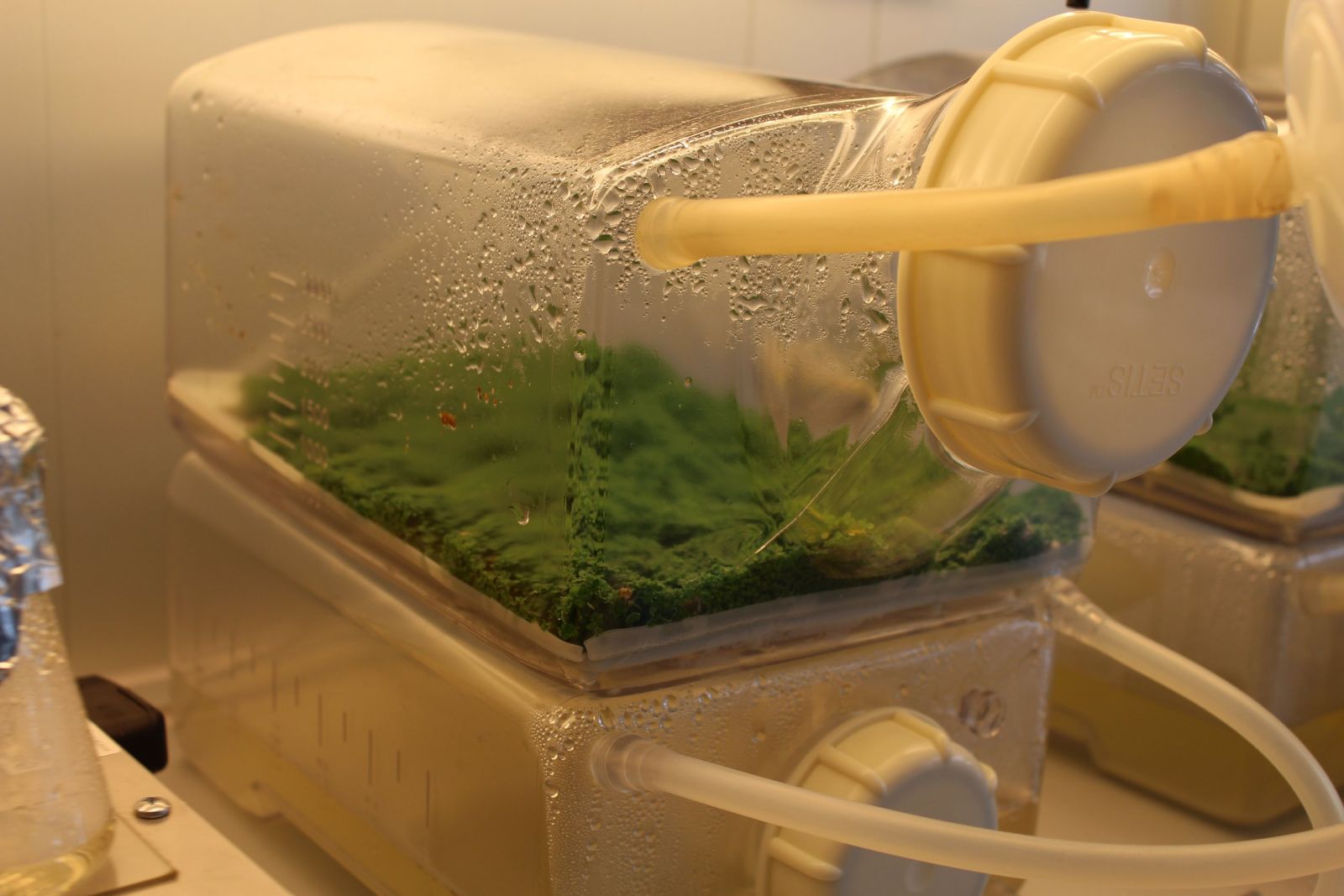
- Micropropagation and optimization of economically important plant species using RITA® and SETIS™ bioreactor systems.
- Identification of genotypes tolerant to abiotic stress factors through in vitro selection techniques.
- Rescue and in vitro culture of non-viable embryos obtained from interspecific hybridization.
- Application of synthetic seed technology for plant species of commercial importance.
- Integration of double-phase in vitro culture systems and Thin Cell Layer (TCL) techniques to enhance micropropagation efficiency, along with the exploration of innovative strategies for the in vitro immobilization of plant cells.
Selected Scientific Publications
-
Abacı, A.K., B.Güler, A. Gürel, 2025. Effect of Medium Compositions and Different Culture Conditions on the Physiological Properties and Clonal Micropropagation of Ficus carica L. cv. Sarılop Plant. Arabian Journal for Science and Engineering. https://doi.org/10.1007/s13369-025-10282-y
-
Kete, E., B. Guler, E. Bayram, A. Gurel, 2024. In vitro clonal micropropagation of İzmir oregano (Origanum onites L. cv. “Ceylan-2002”). Turk J Field Crops. 29(2), 274-287. doi: 10.17557/tjfc.1547398.
-
Sacu, M., L.Y. Aktaş, M. Bayraktar, A. Gurel, 2023. Growth and antioxidant defence in hypocotyl-derived calli of two cotton cultivars with contrasting salt tolerance. Plant Cell, Tissue and Organ Culture.154:297–309. https://doi.org/10.1007/s11240-023-02569-5.
-
Bayraktar, M., S. Hayta-Smedley, S. Unal, N. Varol, A. Gurel. 2020. Micropropagation and prevention of hyperhydricity in olive (Olea europea L.) cultivar “Gemlik”. South African Journal of Botany, 128: 264-273.
-
Ekmekçigil, M., Bayraktar, M., Akkuş, Ö., Gürel, A., 2018. High-frequency protocorm-like bodies and shoot regeneration through a combination of thin cell layer and RITA® temporary immersion bioreactor in Cattleya forbesii Lindl. Plant Cell Tissue and Organ Culture. doi: 10.1007/s11240-018-1526-2.